
What the European Commission proposal of regulations on Notified Bodies is really about?
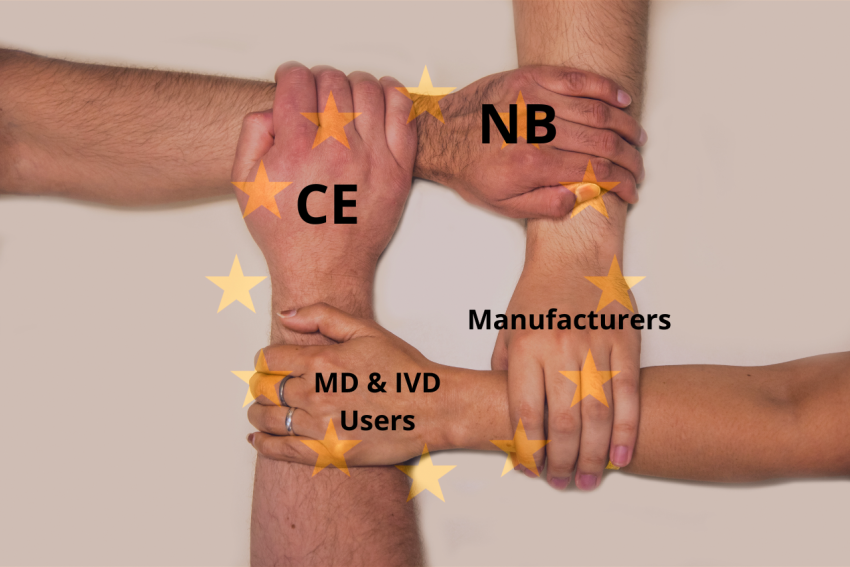
The European Commission has published a draft Implementing Regulation on the uniform application of requirements for notified bodies under the MDR and IVDR. At first glance, this may sound like a technical or procedural update. In reality, it is a significant regulatory initiative that directly affects how medical devices and IVDs are certified, how long this takes, and how much it costs across the European Union.
For manufacturers, this is not just another legal text to track. It directly addresses long-standing pain points under the MDR and IVDR: opaque quotations, unpredictable timelines, diverging practices between notified bodies, and persistent capacity constraints. All of these continue to be major obstacles to market access and continuity of supply in Europe.
Índice de contenidos
Index of contents
Index du contenu
Inhaltsverzeichnis
Indice dei contenuti
- What Is the EU Initiative on “Rules to Be Met by Notified Bodies” About?
- How Does This Proposal Fit into the MDR/IVDR Framework?
- How Does the Draft Seek to Increase Transparency on Costs and Timelines?
- How Could the Proposal Accelerate and Stabilise Certification Routes?
- How Do the Timeline Articles Regulate Conformity Assessment, Changes and Re-Certification?
- How Do the “Clock-Stop” Articles Limit Interruptions?
- What Grey Areas Remain in 2025 – and Why Is Clarification Still Needed?
- So What About Translation in All This?
- Conclusion
What Is the EU Initiative on “Rules to Be Met by Notified Bodies” About?
The initiative titled “Medical devices – uniform application of the requirements for notified bodies” is the Commission’s response to a clear and repeated signal from industry, notified bodies, and Member States alike:
Annex VII of the MDR and IVDR, on its own, has not been sufficient to ensure consistent behaviour across notified bodies.
While Annex VII defines what notified bodies must do, it leaves significant room for interpretation on how they should organise their work, assess documentation, plan audits, and price their services. The result has been fragmentation, uncertainty, and unequal treatment for manufacturers with similar devices.
How Does This Proposal Fit into the MDR/IVDR Framework?
The draft Implementing Regulation is designed to operationalise Annex VII and reinforce broader MDR/IVDR reform efforts. Its objectives are threefold:
- Translate high-level Annex VII obligations into concrete, enforceable operational rules governing how notified bodies plan, perform and conclude conformity assessments.
- Address persistent bottlenecks, especially unpredictable timelines, lack of cost transparency, and diverging assessment practices.
- Support wider MDR/IVDR stabilisation measures, including transitional extensions and initiatives aimed at preventing device shortages and improving availability on the EU market.
In short, this proposal is not about changing what needs to be demonstrated for conformity, but about making the certification system work more predictably and consistently in practice.
How Does the Draft Seek to Increase Transparency on Costs and Timelines?
Recent surveys, industry position papers and stakeholder feedback consistently highlight the same problems:
- Manufacturers struggle to estimate total certification costs under MDR and IVDR.
- Review timelines vary widely between notified bodies, even for similar devices and risk classes.
- There is limited visibility into where time is actually spent during conformity assessments.
The draft Implementing Regulation addresses these issues through several mechanisms:
- Structured quotation procedures: manufacturers must provide defined information upfront, and notified bodies must issue detailed quotations with clear cost breakdowns.
- Mandatory monitoring and reporting: notified bodies must track and publish annual statistics on assessment duration and costs, and report them to the European Commission.
- Explicit linkage between quotations and timelines, allowing manufacturers to better plan product launches, inventory, and regulatory strategies across the EU.
How Could the Proposal Accelerate and Stabilise Certification Routes?
Beyond transparency, the proposal introduces tools intended to stabilise planning and reduce unnecessary delays, including:
- Maximum regulatory timelines for key stages of conformity assessment.
- Limits on the use of “clock-stops”, a frequent source of hidden delays under the current system.
- Clearly defined timelines not only for initial certification, but also for substantial changes and re-certification, which are critical for keeping existing product portfolios on the market.
These timelines are framed as regulatory caps, not default service levels. Notified bodies are still expected to work faster where feasible.
How Do the Timeline Articles Regulate Conformity Assessment, Changes and Re-Certification?
Initial Certification
- Application review and contract: 30 calendar days from receipt of a complete application.
- QMS audits: 120 calendar days from the first audit activity to completion.
- Technical documentation assessment: 90 calendar days from the start of the review.
- Final decision and certificate issuance: 15 calendar days after completion of all assessment activities.
Substantial Changes
-
30 days to review the change application.
- 90 days to complete any additional conformity assessment activities.
- 15 days to issue a certificate supplement after approval.
Re-Certification
-
60 days for technical documentation assessment.
- 60 days for any related QMS audit.
- 15 days for the final re-certification decision.
How Do the “Clock-Stop” Articles Limit Interruptions?
To address one of the most criticised aspects of MDR/IVDR practice, the draft introduces explicit limits on interruptions:
- A maximum number of clock-stops is defined for each phase (application, audits, technical documentation review, changes, re-certification).
- Interruptions linked to expert panels, EU reference laboratories or other EU bodies may be excluded.
- Any extension must be justified in writing and agreed between the manufacturer and the notified body.
The clear objective is to prevent procedures from stalling indefinitely while the clock is technically paused.
What Grey Areas Remain in 2025 – and Why Is Clarification Still Needed?
Despite the positive direction of this proposal, several challenges remain:
- Certification timelines are still difficult to forecast in practice.
- The number of MDR/IVDR certificates issued continues to lag behind applications.
- Divergent interpretations of the regulations persist among authorities, notified bodies and manufacturers.
- Some MDR/IVDR provisions remain genuinely unclear, leading to rework and rejected technical documentation.
Further guidance, harmonised positions and targeted amendments will likely still be necessary.
So What About Translation in All This?
Translation is not directly affected by these new rules. However, here’s why translation matters even more in the context of this new notified body initiative:
- EU language rules are still fragmented. Labels and IFUs must meet national requirements, and those requirements vary widely by country and by device type (professional use vs. lay use). That means translation planning is a market access activity, not an afterthought.
- Article 16(3) is a hotspot. Many manufacturers still struggle with how “robust” their translation controls must be (validation, review, traceability, supplier qualification). If notified bodies become more process-driven and comparable, translation procedures will be easier to benchmark and easier to challenge when they’re weak.
- Consistency becomes a compliance issue. The biggest risk is not a single mistranslated word. It’s misalignment between:
- what is submitted to the notified body,
- what is printed on the label,
- what appears in the IFU,
- what distributors upload online,
- and what users actually read in each country.
- Tighter timelines raise the cost of rework. If certification steps become more structured (and “clock-stops” are limited), last-minute translation fixes can trigger delays, document re-approvals, artwork updates, and costly change-control loops.
Choosing the right Language Service Provider is essential to ensuring the quality, consistency, and regulatory compliance of all your multilingual communications. Not all translation companies operate at the same quality standards, and this difference can have a direct impact on regulatory outcomes.
Conclusion
These initiatives are both interesting and necessary to address the challenges associated with the implementation of the regulations adopted in 2017 and effective since 2021. The extension of transitional period clearly highlight the difficulties involved in their implementation. Notified Bodies are often identified as the weak link at the root of these issues, particularly with regard to the resulting bottleneck effect. However, one common underlying factor appears to lie instead in the clarity and precision of the original texts, which often allow for multiple interpretations that are incompatible with the intended overall harmonization.
Sources:
Medical devices –uniform application of the requirements for notified bodies by the European Commission
Team-NB Position Paper on Annex VII – Implementing Regulation Draft by TEAM NB
EU Commission proposes new timelines for notified bodies by RAPS
Other articles you may be interested in:


With a background in Marketing and International Trade, Alex has always shown a passion for languages and an interest in different cultures. Originally from Brittany, France, he has lived in Ireland and Mexico before spending some time back in France and then settling permanently in Spain. He works as Chief Growth Officer at AbroadLink Translations.
Add new comment